I earn commissions when you sign up or buy through the affiliate links on this page, at no extra cost to you.
3D printing · Guide · By Mohammed Almuhanna · Updated
3D Printer Filament Types: PLA, PETG, ABS, and ASA
Four filaments cover almost everything a home printer needs to do. PLA is the easy default, PETG is the tough everyday upgrade, ABS is the strong heat-resistant one, and ASA is the version that survives sun and weather. Picking between them comes down to how easy it is to print, how tough the part needs to be, and how much heat or sun it has to take. ASA is my default, because where I print outdoor parts have to live in hard sun. I run it, and ABS now and then, through an adapter I printed and a 4-inch AC Infinity inline fan ducted outside, and anyone printing those two indoors should do the same before they sit in a closed room full of styrene fumes. Here is what each one is actually good at, and how to choose.
How to think about the choice
Three things decide it. How hard it is to print, where PLA just works while ABS and ASA fight you and want an enclosure. How tough and heat-resistant the part has to be, where a desk model needs neither and a bracket near an engine needs both. And the environment, where indoors is forgiving but direct sun in a hot climate destroys some plastics and leaves others fine. My rule is to pick the easiest material that survives where the part has to live. Do not reach for ASA when PLA would do, and do not put PLA anywhere a car interior will cook it.
PLA: the easy default
PLA is the filament every printer ships tuned for and the one beginners start on. It melts around 190 to 220C, barely warps, needs no enclosure, and sticks to almost any bed without fuss. You can run the part cooling fan at full blast, which is part of why it prints the crispest detail of any common filament: sharp corners, fine text, and clean overhangs all come out well.
PLA is also brittle and soft in heat. It snaps rather than bends under load, and it starts to soften around 55 to 60C, which a car in summer or a sunny windowsill hits easily. That makes PLA an indoor material for anything that matters. Best uses: models, miniatures, prototypes, toys, and decor where detail wins and the part never sees real heat or abuse.
PETG: the tough everyday upgrade
PETG is the step up when a part has a job to do. It runs hotter, around 230 to 250C, and it strings and oozes more, so you spend time tuning retraction and cleaning fine hairs off the part. It also sticks to the bed almost too well: on bare PEI it can bond hard enough to tear chunks out of the sheet, so a thin film of glue stick works as a release layer and protects the plate. Run less part cooling than you would for PLA, since too much fan weakens layer bonding.
In return you get a much tougher part. PETG bends before it breaks, absorbs impact instead of shattering, and handles repeated flexing far better than PLA. It holds its shape to around 70 to 80C and resists moisture and UV better, so it survives outdoors in shade where PLA would warp, though a parked car still cooked one of mine, see the hot-car test. It is the everyday workhorse for brackets, mounts, enclosures, and clips. If you are choosing specifically between these two, the dedicated PLA vs PETG guide covers that head-to-head in depth.
ABS: strong and heat resistant
ABS is the old engineering workhorse. It is strong, heat resistant to around 100 to 105C, and machinable, so you can drill, tap, sand, and even acetone-smooth it to a glossy finish. For functional indoor parts that get hot, like something near a motor, a power supply, or an engine bay, ABS holds up where PLA and PETG would sag.
It is a pain to print, though. ABS warps badly as it cools, so it needs an enclosure and a stable heated bed, with the door shut and drafts kept off the part. It also gives off a strong styrene smell while printing that you want ventilated, not breathing in a closed room. The health effects of ABS and ASA fumes, mostly styrene and ultrafine particles, are still being studied, so if you print these often or have any respiratory concern, vent outdoors and follow local health and safety guidance. And despite the heat resistance, ABS degrades and yellows under UV: leave a black ABS part in the sun and it fades, chalks, and gets brittle within a season. That rules it out for serious outdoor use. Keep ABS for indoor parts that need to take heat or mechanical stress.
ASA: ABS that survives the sun
ASA is what I reach for most, because where I print, outdoor and automotive parts have to live in hard sun and real heat. ASA is ABS's outdoor-grade cousin. It has similar strength and heat resistance, holding to around 100 to 105C, and it prints much like ABS: enclosure required, warps as it cools, gives off fumes, and wants little to no part cooling. The difference that matters is UV and weather resistance. ASA holds its color and its mechanical strength in direct sun where PLA melts and ABS yellows, chalks, and cracks. For anything that lives outside in a hot, sunny, dusty climate, ASA is the right answer.
To print it well, treat warping as the main enemy. Use an enclosure and let the chamber warm up before you start, so the part cools slowly and evenly. A wide brim, or a draft shield in the slicer, holds the corners down and keeps stray air off the part. Keep part cooling at zero or very low, since fan air on ASA cracks layers and makes warping worse. A first layer that is slightly squished, on a clean PEI plate with a touch of glue stick, gives the grip you need against the lifting force.
Dry storage is not optional. ASA, like ABS and PETG, picks up moisture from the air, and in humidity that shows up as popping, stringing, and a rough, weak surface. Keep spools in a sealed box with desiccant and dry the filament before a long print if it has been sitting out. Done right, ASA gives you parts that come off the printer looking like ABS but actually survive years of sun, heat, and dust without going brittle. That is why it is my default for outdoor brackets, vehicle mounts, sensor housings, and anything bolted to something that bakes all day.
Which one to pick
Work down the list. If the part lives indoors and just needs to look good or prove out a design, print PLA and move on. If it has a real job, gets handled, flexes, or sees water or mild heat, use PETG. If it needs to take serious heat indoors and you do not mind running an enclosure with ventilation, use ABS. And if it lives outdoors or anywhere the sun and heat are brutal, use ASA, every time. The short version: PLA for easy and indoor, PETG for tough and everyday, ABS for hot and indoor, ASA for hot and outdoor.
| PLA | PETG | ABS | ASA | |
|---|---|---|---|---|
| Ease of printing | Easiest, no fuss | Moderate, strings | Hard, warps | Hard, warps |
| Strength and toughness | Stiff but brittle | Tough, impact resistant | Strong, rigid | Strong, rigid |
| Max temp before softening | ~55 to 60C | ~70 to 80C | ~100 to 105C | ~100 to 105C |
| Outdoor and UV | Poor | Decent, the budget outdoor pick | Poor, yellows and cracks | Excellent, the outdoor pick |
| Enclosure and fumes | None needed, low odor | None needed, low odor | Enclosure, strong fumes | Enclosure, strong fumes |
| Cost per kg | ~$10 to $30 | ~$10 to $30 | ~$15 to $35 | ~$20 to $40 |
What about the exotics
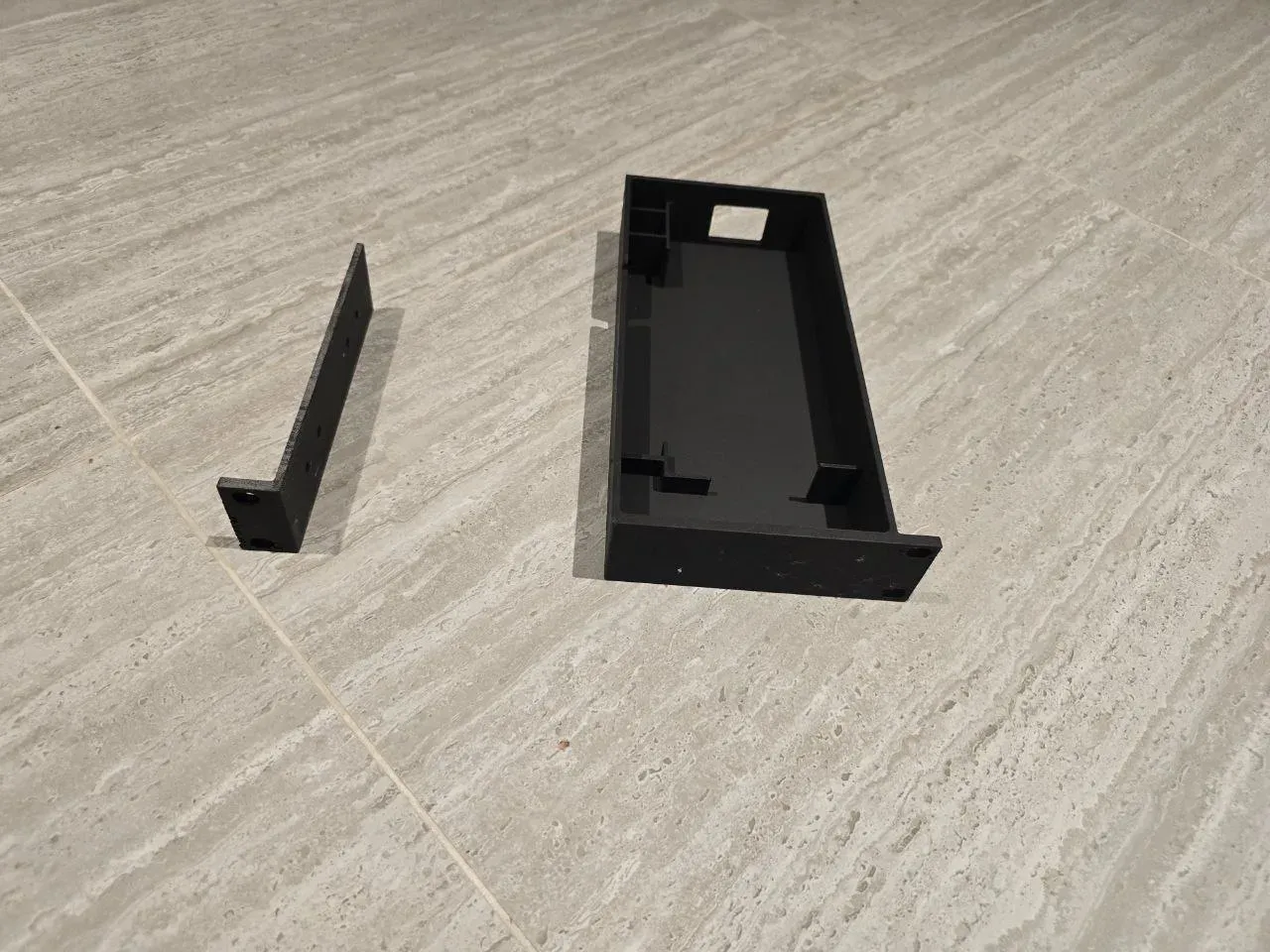
Beyond these four, TPU is a flexible, rubbery filament for parts that need to bend, squish, or grip, and the carbon-fiber blends (PLA-CF, PETG-CF) add stiffness and a matte finish at the cost of needing a hardened nozzle. I printed the rack-mount bracket for my UniFi switch in PETG-CF, and it is genuinely strong and stiff, but the surface comes out rough and the fibers make it abrasive, so I keep it off anything people handle often. They are worth knowing about, but the four above cover the vast majority of home prints.
Price your print in any material
Once you have picked a filament, the 3D print cost calculator tells you what the print actually costs. Enter the grams and print time, set your filament price per kg (ASA and ABS run a bit higher than PLA and PETG), and it adds material, power, machine wear, and a failure buffer. The harder materials tend to fail more while you dial them in, which the failure buffer is there to cover.
Common questions
Which filament should I use for outdoor parts?
ASA, in most cases. It holds its color and mechanical strength in direct sun where PLA melts and ABS yellows, chalks, and cracks, so it is the right answer for anything living outdoors in hot, sunny conditions. PETG is a decent budget outdoor option for milder use.
Do ABS and ASA need an enclosure?
Effectively yes. Both warp badly as they cool, so they need an enclosure and a stable heated bed with drafts kept off the part, and little to no part cooling. They also give off strong styrene fumes you want ventilated, not breathing in a closed room.
What is the difference between ABS and ASA?
They have similar strength and heat resistance, holding to around 100 to 105C, and print much the same way. The difference that matters is weather: ASA resists UV and sun, while ABS degrades, yellows, and gets brittle in sunlight within a season. Use ASA outdoors and ABS for indoor parts that need heat resistance.
Which filament is easiest for a beginner?
PLA. It melts around 190 to 220C, barely warps, needs no enclosure, sticks to almost any bed, and runs with full part cooling, which is why every printer ships tuned for it. Start there and move up to PETG, ABS, or ASA only when a part actually needs the toughness or heat resistance.